The programmable solar outlet: when an energy device gets its own economic identity
On September 17, working with TLAY, a drone landed on an eCandle and paid for measured energy with signed USDC authorisations. What it means when an energy device gets its own economic identity.
Before explaining what happened when a drone landed on an eCandle, it is useful to explain what an eCandle already is.
An eCandle is an energy endpoint designed by Arkreen to make renewable energy visible and usable at the edge. It connects a physical supply of electricity with digital identity and network participation.
On September 17, working with TLAY, we added another layer to that endpoint: the ability to participate in a machine-payment session.
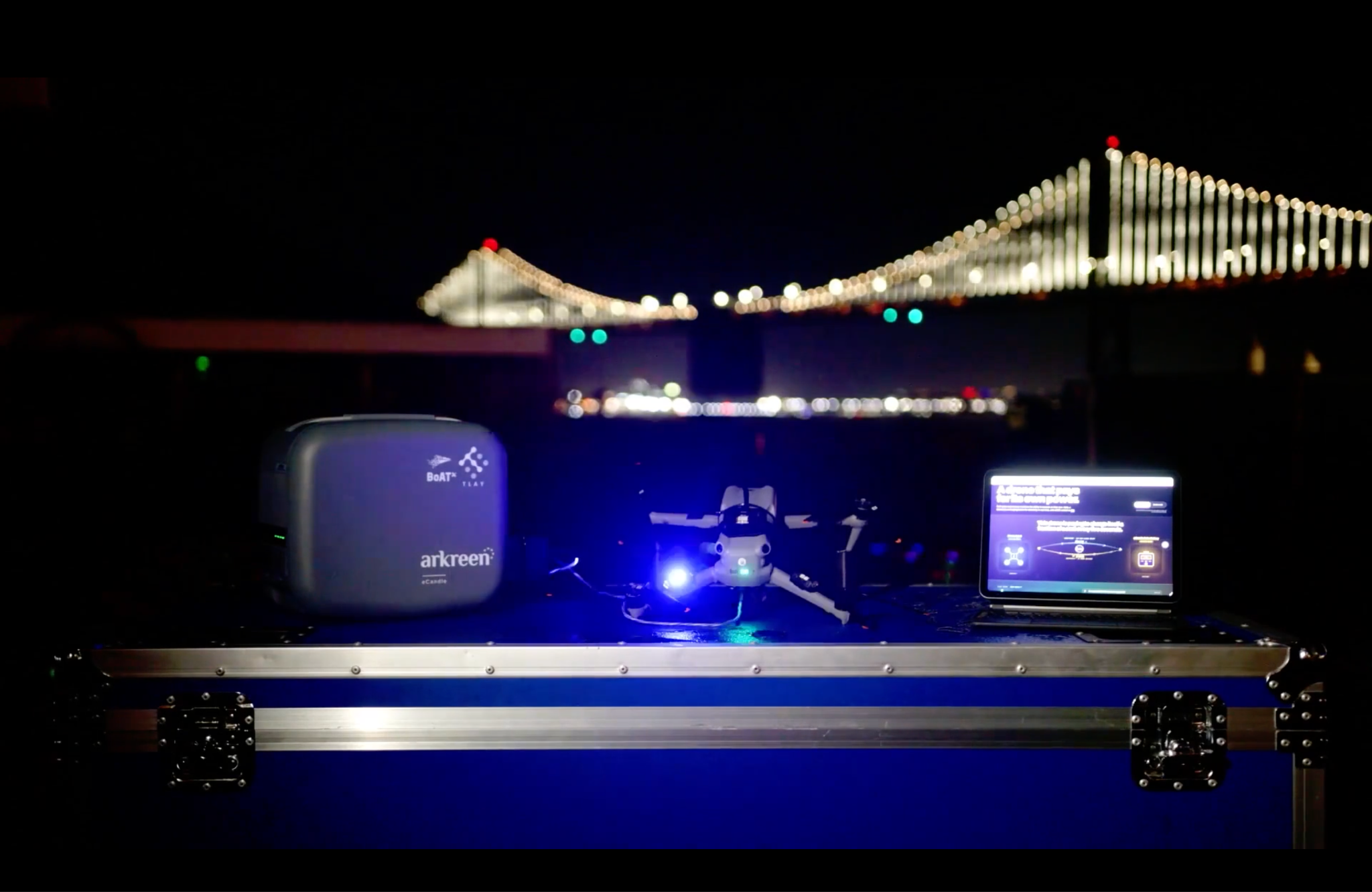
The result was easy to see. A drone landed, the eCandle supplied power, and a live interface began displaying usage-based USDC payment authorisations. No person scanned a code or confirmed a wallet pop-up.
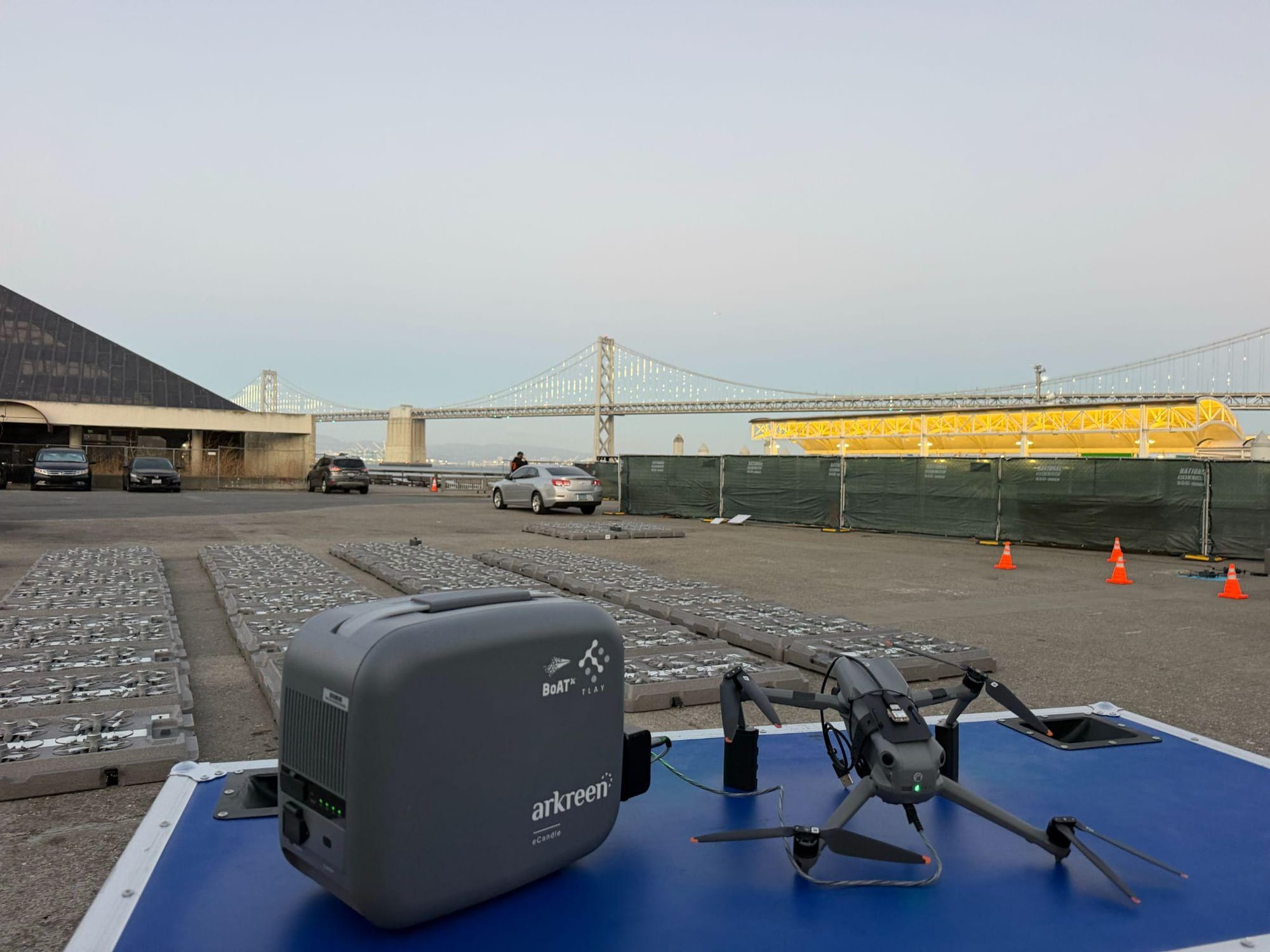
But from Arkreen's perspective, the most interesting part was not the drone. It was the moment an energy device became capable of describing a resource, requesting payment and receiving value as part of the same automated interaction.
An energy device is more than a socket
Most electrical outlets are economically invisible.
They can supply power, but they cannot identify themselves to another machine. They cannot describe the source or price of the resource. They cannot request payment using a shared digital format. They cannot prove which payment corresponded to which measured interval.
As distributed-energy systems grow, that limitation becomes more important.
Solar panels, batteries, chargers and controllable loads are becoming smaller, more numerous and more connected. Many will interact with software and other machines more often than they interact with a human operator.
For those devices, a useful economic identity needs several properties:
- a way to identify the device or operator;
- a trustworthy measurement of the resource;
- a machine-readable offer;
- a policy for requesting and accepting value;
- a verifiable record of authorisation and settlement.
The drone demonstration connects those properties in one visible session.
What TLAY added
Arkreen supplied the energy endpoint and physical context. TLAY contributed the embedded identity, payment protocol and settlement integration that turned the exchange into a machine-readable commercial flow.
The drone acted as the buyer. The eCandle acted as the seller.
After connecting over Bluetooth Low Energy, the eCandle published its payment requirements and began supplying power. Every five seconds, it requested payment for measured usage. The drone signed an EIP-3009 USDC payment authorisation using a key held on the device.
The eCandle collected those authorisations and formed batches for settlement through Circle Gateway via TLAY HsshAnchor.
When the seller chose to move cleared value on-chain, the eCandle signed a different EIP-712 intent. That separate step produced verifiable USDC on Arc Mainnet.
The distinction matters. The system did not create an Arc transaction for every five seconds of charging. It created frequent, signed usage authorisations, settled them efficiently and used Arc when on-chain finality was useful.
Why programmable energy needs local intelligence
Energy is physical. Network connectivity is not always reliable. A device may need to keep operating when a cloud service is slow or unavailable.
That means not every decision should begin in a remote application.
The endpoint needs enough local intelligence to:
- measure what it supplied;
- maintain the current session;
- publish payment requirements;
- validate signed responses;
- enforce exposure or service limits;
- preserve records for later settlement.
This does not mean the eCandle should become a full financial system. It means the physical edge needs a clear boundary between measurement, authorisation and settlement.
When that boundary is well designed, the same energy device can work with different applications and operators without rebuilding the entire interaction for every project.
What changes for an energy operator
Today, many small energy exchanges are difficult to commercialise because the payment overhead is larger than the value of the event.
A short charge may be worth only a fraction of a conventional transaction. A sensor or robot may need access for minutes. The operator may not know the device owner in advance.
A machine-payment layer creates several possible models:
- pay per measured energy interval;
- pre-authorise a maximum session value;
- aggregate many small interactions before settlement;
- offer different tariffs to verified device classes;
- distribute cleared value to an operator or asset owner;
- connect settlement records with energy provenance.
These are design possibilities, not claims that one demonstration has solved regulation, metering standards or commercial deployment.
Real energy systems still require certified meters, operational controls, consumer and market rules, security reviews and dispute processes. The value of the demo is that it creates a technical boundary where those requirements can be connected to payment logic.
Three directions we want to explore
Charging for autonomous equipment
Drones, robots and mobile equipment need energy but may not have a human available to open an app.
A device-level session can allow the charger to publish price and limits while the equipment authorises usage within its own policy.
Local energy services
A battery, solar endpoint or flexible load can offer a measurable service to a local network.
Machine-readable identity and payment requirements can help connect a physical event to a commercial record, particularly in controlled pilots.
Energy-linked data
Energy devices also produce data: generation, consumption, availability and provenance.
A programmable endpoint may be able to package a verified data product alongside the physical resource, creating a separate paid interaction for applications that need trusted energy information.
Why public proof matters
The energy and blockchain industries both suffer when demonstrations make claims that cannot be inspected.
For this reason, the event package separates each layer:
- the usage request;
- the drone's signed authorisation;
- the batch and Circle settlement identifier;
- the eCandle's separate Arc intent;
- the final Arc transaction.
Not every record is on-chain. The value of the architecture is that each record has a defined role and can be connected to the next.
From an eCandle to a network of economic devices
The drone show is a beginning, not a product announcement for a universal autonomous-energy market.
It demonstrates that an energy endpoint can combine physical supply, local measurement, device identity and programmable payment logic in one interaction.
The next step is to test that primitive in narrower, operationally useful settings: a controlled charging network, a distributed-energy pilot or a verified energy-data service.
If you operate energy hardware or are building an application that needs machines to pay for a physical resource, we would like to map the flow with you.
Watch the demonstration: https://x.com/arc/status/2102155914484576408